
🧬 Peptide Storage, Preparation & Handling Guide
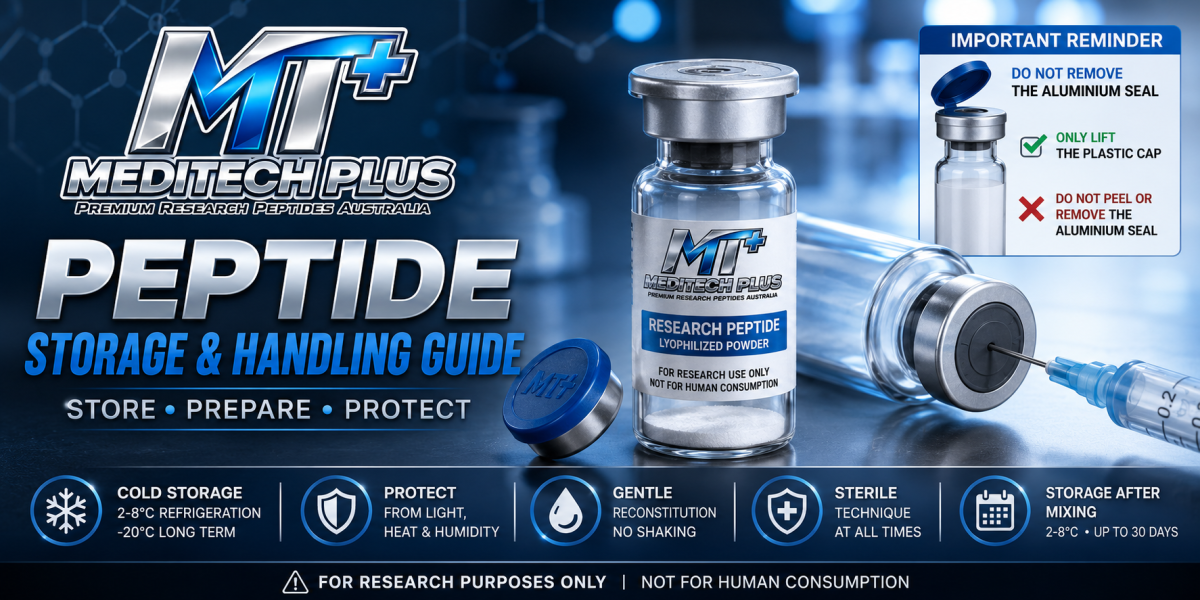
How To Properly Store, Prepare and Protect Research Peptides
Peptides are extremely delicate research compounds. Their stability and molecular integrity can be affected by temperature changes, light exposure, improper mixing, contamination, poor handling, or incorrect storage.
If peptides are not handled correctly, they can degrade quickly, become unstable, turn cloudy, lose structural integrity, and reduce research consistency.
Proper care, storage, and preparation is essential to maintain peptide stability and protect research quality.
This guide explains everything you need to know about storing, handling, preparing, and protecting peptides correctly from start to finish.
🔬 Why Proper Peptide Handling Matters
Peptides are chains of amino acids that form highly sensitive molecular structures.
These structures can be easily damaged by:
⚠️ Heat exposure
⚠️ Direct sunlight
⚠️ Cold shock during mixing
⚠️ Improper reconstitution
⚠️ Contamination
⚠️ Aggressive shaking
⚠️ Incorrect storage
⚠️ Repeated temperature changes
When peptides degrade they may:
❌ Lose structural integrity
❌ Become cloudy or unstable
❌ Break down into inactive fragments
❌ Lose consistency in research applications
Correct preparation protects the molecule and ensures reliable stability.
❄️ Storage of Lyophilised (Powder) Peptides
Most peptides are supplied in lyophilised powder form, meaning they are freeze-dried for improved stability.
Before mixing, lyophilised peptides are far more stable when stored correctly.
Recommended Storage Conditions
🌡️ Temperature
Store between 2°C to 8°C inside a refrigerator.
🧊 Long Term Storage
For longer-term storage, peptides may be kept frozen at -20°C.
🌞 Light Protection
Keep away from sunlight and UV exposure.
💧 Moisture Protection
Avoid humidity and moisture exposure.
🔒 Keep Vials Sealed
Do not open the vial until you are ready to prepare it.
Lyophilised peptides remain stable much longer when stored correctly.
🚨 DO NOT REMOVE THE ALUMINIUM SEAL
This is one of the most common mistakes people make.
Correct vial opening procedure:
✔️ ONLY remove the small plastic flip cap
This exposes the rubber stopper underneath.
❌ DO NOT peel off the aluminium seal
The aluminium ring that holds the rubber stopper in place must stay attached.
That metal seal is there to maintain sterility and protect the stopper.
If you rip the aluminium seal off:
❌ You compromise sterility
❌ You expose the stopper to contamination
❌ You increase bacterial risk
❌ You damage proper vial protection
The rubber stopper should ONLY be accessed by inserting a sterile needle through it.
Never remove the full aluminium seal.
💧 Bacteriostatic Water Handling Rules
Bacteriostatic water is commonly used for peptide reconstitution because it contains benzyl alcohol which helps reduce bacterial growth.
However, improper use can damage the peptide.
Very Important Rules
🌡️ Allow BAC Water To Reach Room Temperature First
Never use cold bacteriostatic water straight from the fridge.
Cold BAC water can cause temperature shock (cold shock) to the peptide molecules, which can stress and destabilise the structure.
Allow the vial to sit at room temperature first.
🧪 Correct Peptide Reconstitution Method
Follow this exact process.
Step 1
🌡️ Allow bacteriostatic water to reach room temperature
Step 2
🧼 Clean vial tops using sterile alcohol prep pads
Always wipe both:
✔️ Peptide vial
✔️ BAC water vial
Step 3
💉 Use a new sterile syringe
Never reuse syringes.
Step 4
Inject BAC water
Step 5
Allow the peptide to dissolve naturally
🧫 Avoiding Contamination
Sterility matters.
Poor sterile practice causes most peptide issues.
Always follow:
✔️ Use new sterile syringes every time
✔️ Clean vial stoppers with alcohol pads
✔️ Never touch needle tips
✔️ Never touch vial openings
✔️ Keep the aluminium seal intact
✔️ Store in clean environments
✔️ Minimise air exposure
Contamination often causes:
⚠️ Cloudiness
⚠️ Instability
⚠️ Poor dissolution
⚠️ Bacterial growth
☁️ Understanding Cloudiness
Peptides should usually dissolve into a clear solution.
Cloudiness can happen due to:
⚠️ Cold shock from cold BAC water
⚠️ Direct spraying onto peptide powder
⚠️ Improper storage
⚠️ Heat exposure
⚠️ Contamination
⚠️ Aggressive shaking
⚠️ Light exposure
⚠️ pH sensitivity
Most of the time, cloudiness is caused by handling — not product quality.
Peptides are extremely sensitive molecules.
🔥 Protecting Peptides From Heat
Heat is one of the fastest ways peptides degrade.
Avoid exposure to:
☀️ Direct sunlight
🚗 Hot cars
🔥 Warm rooms
♨️ Heaters
📦 Shipping delays in high heat
Even short exposure can reduce stability.
🌞 Protecting Peptides From Light
UV light can damage peptide bonds.
Always store peptides:
📦 Inside boxes
🧊 Inside refrigerators
🌑 In dark environments
🚫 Away from windows
Light protection helps preserve molecular stability.
🤲 Best Handling Practices
✔️ Keep storage temperature consistent
✔️ Minimise vial agitation
✔️ Avoid repeated fridge in/out cycles
✔️ Handle gently
✔️ Keep aluminium seal intact
✔️ Never rush reconstitution
The less disturbance, the better.
❌ Most Common Mistakes
🚫 Removing the aluminium seal
🚫 Using cold BAC water
🚫 Leaving peptides at room temperature
🚫 Using non-sterile equipment
🚫 Repeated fridge removal
🚫 Light and heat exposure
These mistakes cause most peptide problems.
📋 Quick Storage Checklist
Before Mixing
✔️ Refrigerate lyophilised peptides
✔️ Keep vials sealed
✔️ Protect from light
✔️ Do not remove aluminium seal
During Mixing
✔️ BAC water at room temperature
✔️ Inject slowly down vial wall
✔️ Use sterile syringes
✔️ Avoid shaking
After Mixing
✔️ Refrigerate immediately
✔️ Protect from heat/light
✔️ Use sterile handling every time
🧠 Final Thoughts
Peptides are highly sensitive research compounds.
Proper storage, careful reconstitution, sterile technique, and correct handling all play a major role in protecting peptide stability.
Most peptide issues are caused by handling mistakes — not product quality.
sterile preparation always gives the best outcome.
⚠️ Research Disclaimer
All products are intended for labo